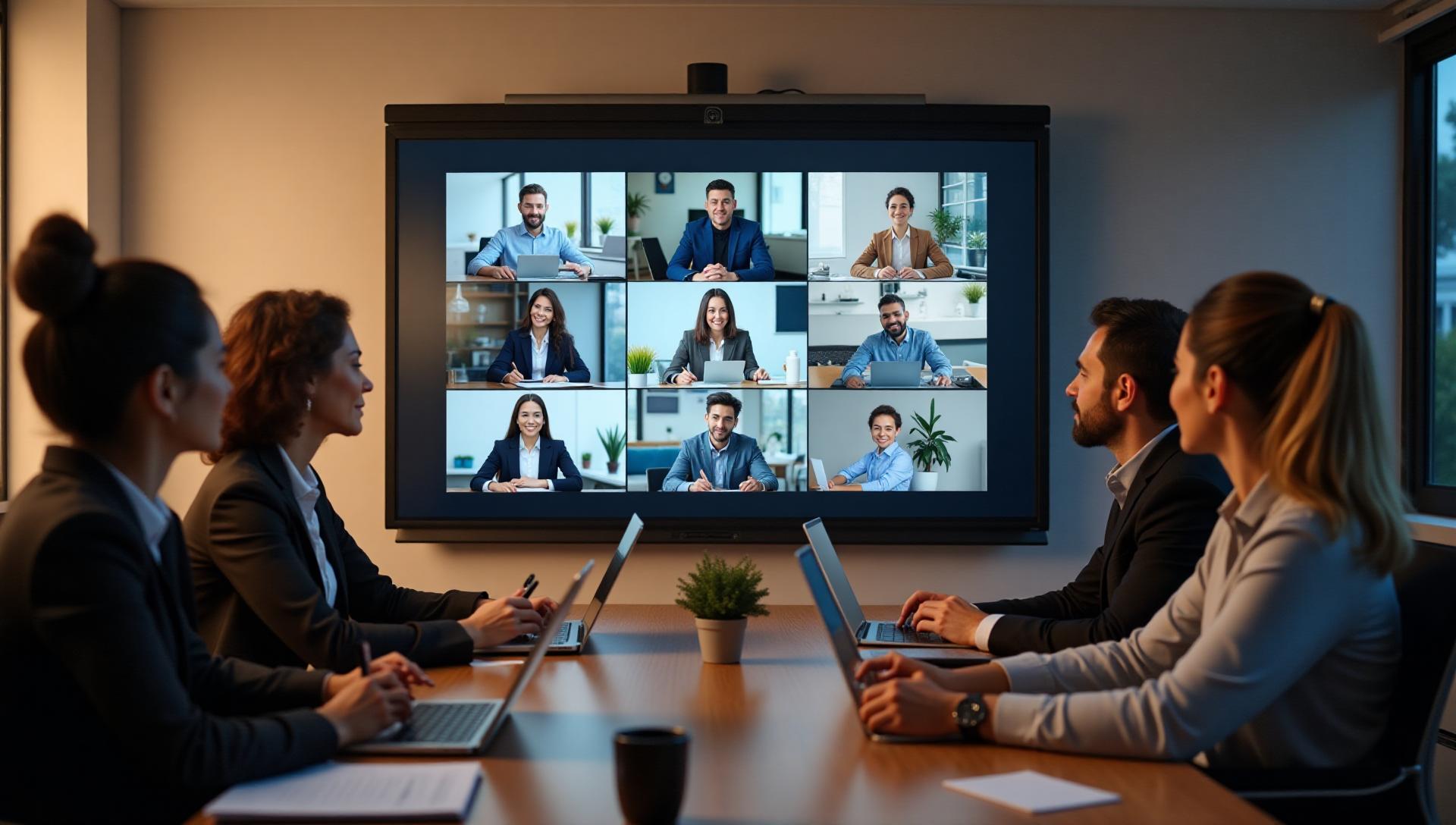
Associate Meeting Room Experience
Defining the End-to-End Hybrid Meeting Room Experience for a Healthcare Organization
Challenge
The healthcare organization faced the challenge of returning to office in a post-COVID hybrid work environment. Associates were navigating new mental models for work and collaboration, with legacy rooms and platforms being used alongside newly updated Zoom Rooms. The organization needed to understand and define the expected end-to-end meeting room experience to ensure productive hybrid collaboration.
Key challenges included:
- COVID hybrid work context with some people remote while others were in-person
- Various (potentially changing) workstyles and new mental models for work and collaboration
- Legacy rooms and platforms being used alongside newly updated Zoom Rooms
- Assumptions that associates would naturally adopt new meeting room technology with minimal support
Our Approach
Stratos utilized human-centered design and participatory design methods to explore desirability and achieve problem-solution fit. Our approach included:
- Group Co-Design Sessions: Lego Serious Play sessions to explore an ideal meeting room experience that solves pain points and supports host mental models
- Individual Research/Testing Sessions: One-on-one associate interviews to understand the remote meeting context through the most common meeting scenarios
- Service Safari: Exploring the defined ideal meeting room experience through three scenarios in context
- Concept Testing: One-on-one testing to validate the desirability of proposed solutions
Key Research Findings
Through our research, we uncovered critical pain points and mental models that were preventing successful hybrid meetings:
Pain Points Across the Journey
- Awareness: Zoom trainings didn't meet associates where they were; perception of room technology being unreliable
- Preparing: Relevant meeting room information not available when scheduling; meeting information sent through email went unread
- Finding: Current wayfinding process not intuitive; meeting room information not accessible beyond Outlook
- Activating: "Joining from a room" was not understood; limited understanding of touch panel capabilities
- Collaborating: Inability to equally collaborate without using laptop; in-person participant voices dominated the room
Key Insight
"My worst meeting nightmare is just a constant series of petty interruptions... if it's technology, it's everyone muting themselves and forgetting to unmute... we want to share something on the monitor but the person whose sharing doesn't know how to... so we have to wait 10 minutes... it's that series of small interruptions."
- Associate Participant
Solutions & Opportunities
Based on our research, we identified three major opportunity areas and co-designed solutions with associates:
1. Tech Awareness & Preparing the Room
Associates sought training on the holistic end-to-end meeting room experience. Solutions included:
- Interactive, hands-on virtual training with live facilitators
- In-person meeting room 'sandbox' for immersive learning
- Mandatory associate training to ensure confidence and mastery
- Certified Zoom Room SMEs available for support
- Hybrid engagement training for best practices
2. Finding the Room
Associates desired wayfinding support for post-RTO challenges. Solutions included:
- Digital door displays showing meeting schedules and room capabilities
- Static floor maps at entrances and exits
- Lobby displays for wayfinding
- On-the-spot booking capabilities through door displays
3. Activating the Room
Associates' remote habits created pain points for in-room activation. Solutions included:
- Host name highlighted on touch panel for confidence
- Support information and direct line to meeting room support
- 'Join from the room' instructions on room screens
- Clear prompts at key touchpoints to trigger new behaviors
Impact
- Created a comprehensive end-to-end meeting room experience journey map that guides future decision-making
- Identified three major opportunity areas with actionable, desirable solutions validated by associates
- Developed detailed success criteria for implementation of each solution area
- Generated associate buy-in through participatory design, giving them ownership in the transformation
- Provided a roadmap for supporting hybrid work that balances technology capabilities with human needs and behaviors
- Established clear guidelines for training, wayfinding, and room activation that reduce meeting friction and improve productivity