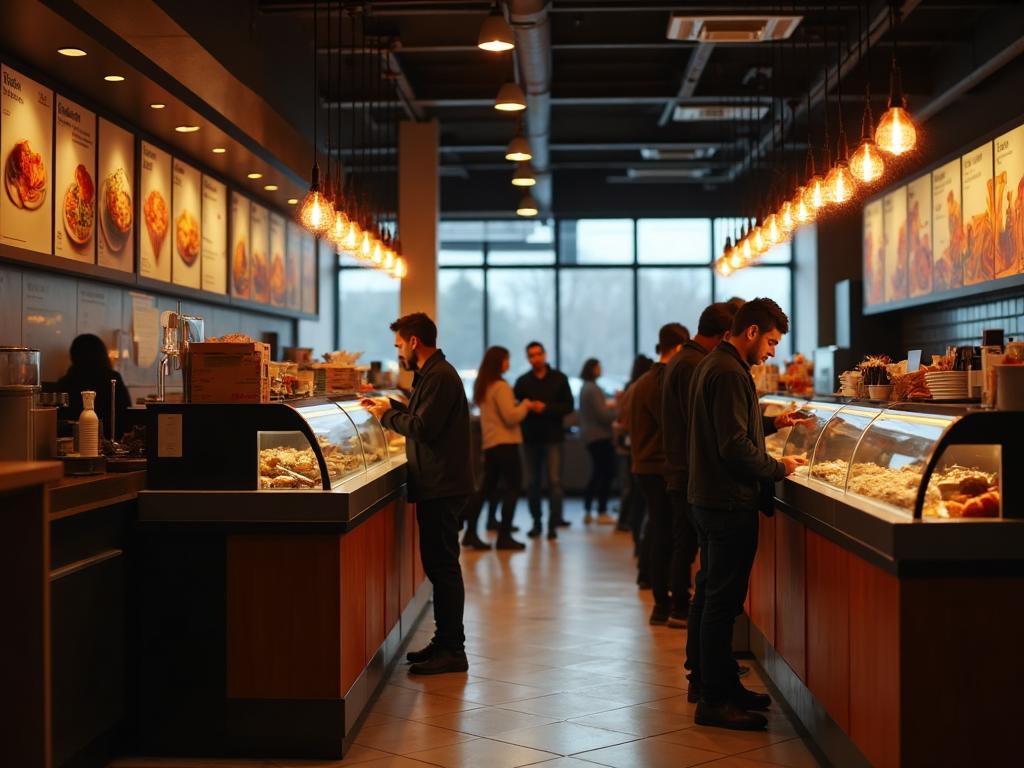
A national restaurant brand was opening new locations with strong initial performance that were often exceeding $100K in weekly sales. Yet leadership saw a consistent pattern: revenue softened more quickly than expected after the opening surge.
The issue was not demand. It was durability.
Guests were curious. They showed up. But repeat behavior did not match early enthusiasm.
For multi-unit operators, this is a familiar tension. Marketing drives trial. Grand openings create momentum—but sustained performance depends on how well high-volume experience moments hold up under operational pressure.
Leadership needed clarity on a simple but high-stakes question:
Which moments in the guest journey truly determine whether a first visit becomes a habit?
Stratos conducted an in-market experience diagnosis across two newly opened locations. Rather than beginning with assumptions, we gathered live guest insight during opening week and revisited those same guests one month later.
Our work included:
- 40 in-person guest intercepts across drive-thru and dine-in channels
- 19 follow-up interviews to understand return behavior
- Expectation vs. experience mapping across peak-volume moments
- Operational and emotional friction analysis
The objective was not a broad redesign. It was strategic focus.
We aimed to identify the specific journey moments where experience integrity most directly influences repeat visits, frequency, and brand trust.
This is a major element of the Experience Advantage work: isolate the moments that disproportionately shape performance.
The findings were decisive. Food quality, value perception, and frontline friendliness largely met expectations. The breakdown occurred in a different place, under operational strain.
During peak dinner volume at one location, we observed:
In follow-up conversations, more than half of guests cited speed and perceived inefficiency as their primary hesitation in returning.
For lunch guests in particular, speed was not a preference. It was a constraint. Delays disrupted schedules and eroded confidence in reliability.
When execution faltered in high-volume moments, brand trust weakened.
We also uncovered compounding friction:
- Anxiety ordering under time pressure
- Avoidance when the queues appeared too long
- Increasing preference for order-ahead, curbside, and delivery options
- Desire for stronger order confirmation and clarity
The insight extends beyond restaurants.
In hospitality—whether a hotel check-in, a ticketed venue entry, a quick-service counter, or a guest services interaction—retention often hinges on a small number of high-traffic operational moments.
These moments carry disproportionate emotional weight. When they feel seamless, the brand feels dependable. When they feel strained, frequency declines quietly.
Rather than dispersing investment across broad initiatives, we helped leadership prioritize:
- Drive-thru and pickup flow optimization
- Order-ahead capability at launch
- Reinforcing trust in high-pressure interactions
The work provided executive clarity on where to focus for durable performance beyond opening-week excitement.
Opening strength is a marketing win. Sustained performance is an 'experience delivery' win.
In multi-location environments, even small breakdowns in high-volume moments compound across units and materially affect same-store revenue.
The Experience Advantage Sprint helps leadership teams:
- Diagnose friction across critical journey moments
- Align on 2–3 high-leverage experience priorities
- Define what meaningful, memorable, and operationally sustainable look like
- Focus investment where experience most directly drives retention
If your locations open strong but struggle to convert early traffic into repeat behavior, the issue may not be awareness or product.
It may be a single operational moment quietly shaping long-term performance.
Let's identify it and design it with precision.